The backboards for the new lighting scheme at Ropley we produced some time ago in the workshop are now being installed. The new length of lighting runs alongside the carriage and boiler shop shed, under the Bighton Hill overbridge, alongside the new Traction Maintenance Depot and into the sidings. This will provide illuminated safe walking route access to these areas for the enhanced activity now taking place along this part of the station. A trench was dug and ducting laid in to run the electric cable but also water and compressed air was laid in to provide the necessary services for working on rolling stock and engines.
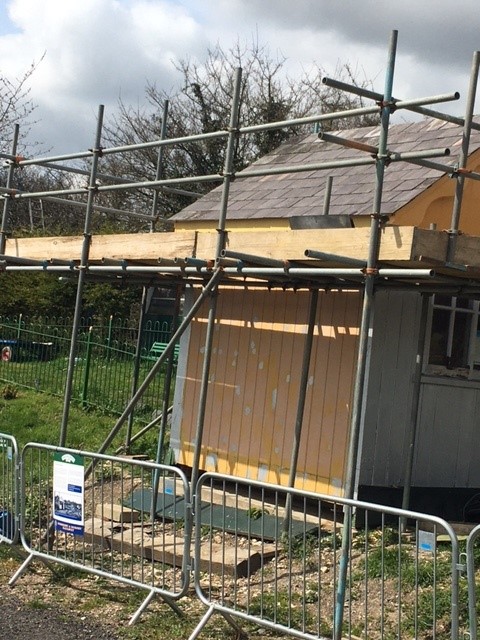
Work has continued on the Burnham on Sea signal box with the slates having been fitted to the roof. The reclaimed slates were laid over a new membrane and battens to fully waterproof the roof and give an original and traditional appearance. The exterior walls have been slowly been worked on by burning off all the old paint and any rotten wood either removed or treated and filled. Aluminium primer has been applied to give a sound base for the repainting to ensure longevity before future repainting is required. Once the exterior is completed it is expected that the interior will be refurbished and painted and eventually fitted out as an interactive attraction on signalling operations.
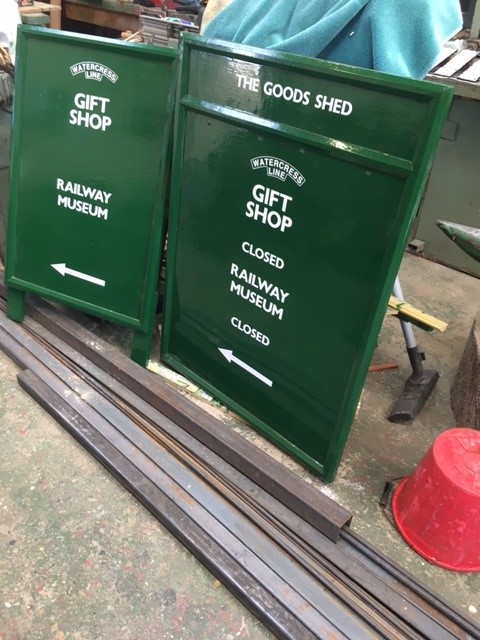
In the workshop some display boards that were in stock are being refurbished, painted up and lettering applied ready to be displayed at Alresford to advertise the West Country Buffet, the railway museum and gift shop. This renovation of items from previous use saves both on expenditure and labour time.
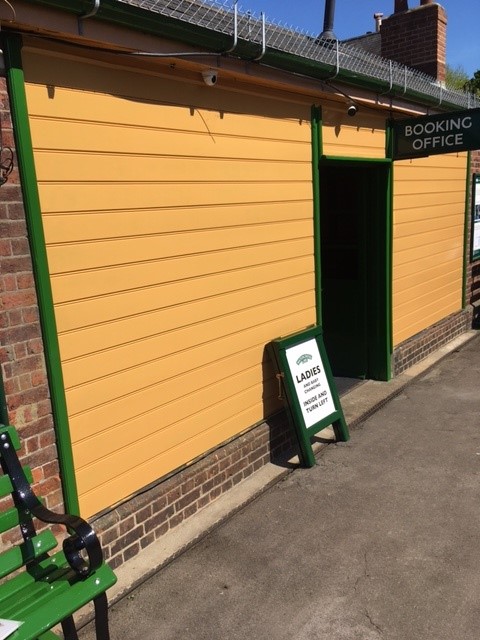
At Medstead a team has been steadily working on replacing the weatherboards on the waiting room on the station building on the up-side platform. The boarding has been problematical over recent years due to the paintwork flaking and peeling only after a couple of years of been painted. Although the wall is in full sun and on the exposed side during the winter months the deterioration is more than what can usually be expected. It is thought that the timber used, together with some other issues, when the station was being rebuilt in the 1980’s, meant that replacement was required to reduce maintenance in the future. Some of the timber removed may be suitable for re-use in a more protected location to limit expenditure in future jobs.
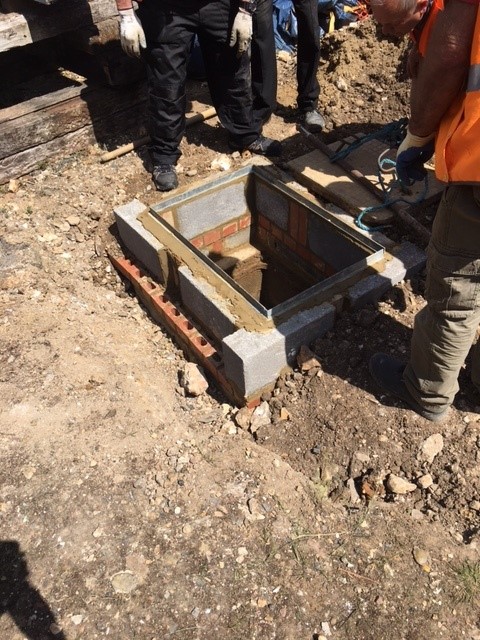
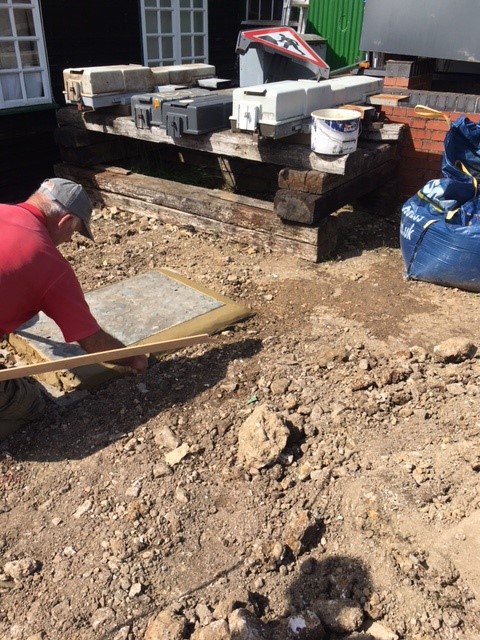
Also at Medstead, another job which is one of those that are ‘behind the scenes’ but necessary for the Railway to function, was the construction of a new inspection pit for the drainage at Medstead. The ground level in this area has been raised over the years and it was necessary to raise the existing pit level to allow easier access for maintenance. This is the sort of job that can be undertaken when we are unable to work in the busy public areas when events are underway. The work also created a greater working space in the yard for jobs that can be undertaken outside.